Lavender is one of the most beloved garden plants – admired for its vibrant purple flowers, soothing fragrance, and resilience in sunny, dry conditions. But while it feels like lavender can thrive on neglect, it actually needs some care at the right time of year. One of the most important tasks is pruning. If you don’t prune lavender correctly, the plant can become woody, lose its shape, and struggle to survive winter.
As autumn sets in, gardeners often wonder: Is it too late to prune my lavender? The truth is, late summer to early autumn is your last real opportunity. Done right, pruning at this time prepares the plant to endure the cold months ahead and ensures vigorous new growth next spring. Let’s take a closer look at how, when, and why to prune lavender before winter sets in.
Why Pruning Lavender Matters
At first glance, it might seem cruel to cut back a plant that just finished flowering. Yet pruning is essential for lavender’s long-term health.
- Prevents woody growth: Without regular pruning, lavender stems turn woody and brittle, producing fewer flowers.
- Encourages new shoots: Cutting back stimulates fresh green growth at the base.
- Shapes the plant: Pruning maintains a compact, rounded shape instead of a sprawling mess.
- Winter hardiness: A tidy, well-pruned plant withstands frost and snow better than a leggy, fragile one.
Think of it as giving lavender a haircut: it looks neat, stays healthier, and will thank you with more blooms.
When Is the Right Time?
Timing is critical. The best moment to prune lavender is just after flowering, usually in late summer. By September or early October (depending on climate), it’s the last chance.
Why? Because lavender needs time to recover before frost arrives. If you prune too late – in November, for instance – the tender new growth won’t have enough time to harden and may be damaged by cold. On the other hand, if you skip pruning entirely, the plant may suffer from winter breakage and decline.
Tools and Preparation
You don’t need fancy equipment. Just a few basics:
- A sharp pair of garden shears or secateurs.
- Gardening gloves (lavender stems can be surprisingly scratchy).
- A bucket or basket to collect clippings.
Make sure tools are clean to avoid spreading disease.
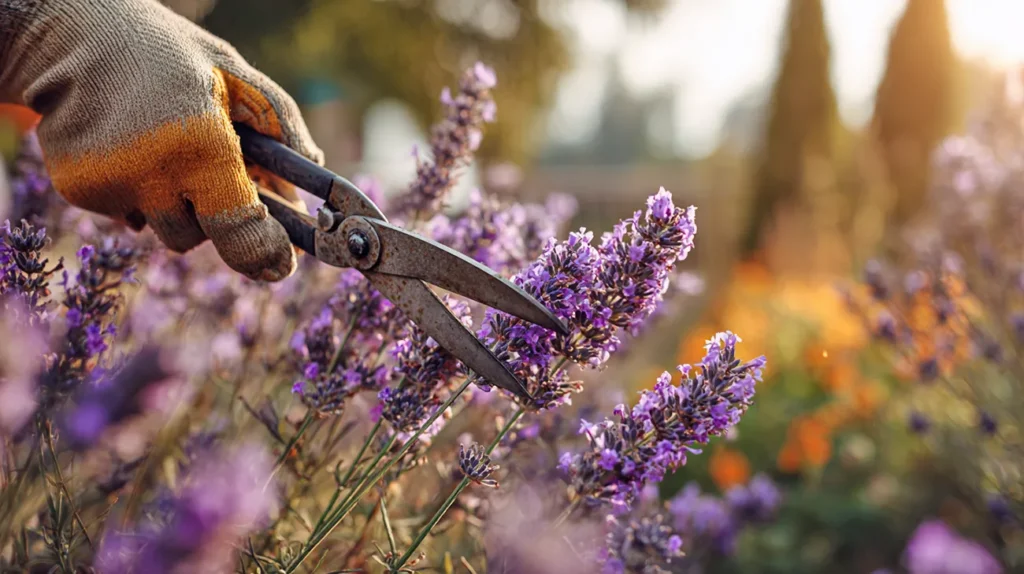
How to Prune Lavender Correctly
The golden rule: never cut into old, woody stems, only into the green part of the plant.
- Remove spent flower stalks – Cut off faded blooms down to where the green foliage begins.
- Shape the mound – Trim the plant back by about one-third of its height. Aim for a rounded, cushion-like shape.
- Leave green growth – Always leave some green shoots behind; lavender rarely regrows from bare wood.
- Check the center – If the middle of the plant is thinning, gently thin out dead or damaged stems to improve airflow.
Done properly, your lavender will look tidy and compact, ready to rest for the winter months.
What Not to Do
- Don’t prune down to the woody base. The plant may not recover.
- Don’t prune too late in the season. Frost-damaged regrowth can set the plant back.
- Don’t leave flower stalks standing – they trap moisture and snow, leading to rot.
Extra Winter Protection
Pruning is only half the job. Depending on your climate, lavender may need a little protection to survive winter.
- Mulch lightly with gravel or sand around the base (not heavy bark mulch, which traps moisture).
- Cover in severe frost with garden fleece or a breathable fabric.
- Avoid soggy soil – lavender hates wet feet in winter, so ensure good drainage.
In milder regions, pruning alone is often enough. But in colder climates, a combination of pruning and winter protection makes the difference between thriving plants and dead ones.
Common Mistakes Gardeners Make
- Pruning only once every few years – leads to woody, unmanageable plants.
- Cutting too hard into old wood – lavender rarely sprouts again.
- Leaving the job too late – October is usually the cut-off in temperate climates.
- Over-mulching with organic matter – increases rot risk instead of helping.
Avoiding these mistakes keeps lavender strong and beautiful for years.
Lavender Aftercare in Spring
Your work in autumn pays off when spring arrives. By cutting back now, you’ll see fresh green shoots emerging in March or April. A light trim in spring (just to tidy up frost damage) is all that’s needed to prepare for another spectacular summer bloom.
Why This Matters Beyond Aesthetics
Lavender is more than just a pretty plant. Bees and butterflies love it, and its fragrance has been prized for centuries. By pruning and caring for lavender properly, you’re not only keeping your garden neat but also supporting pollinators and extending the lifespan of one of nature’s most generous plants.