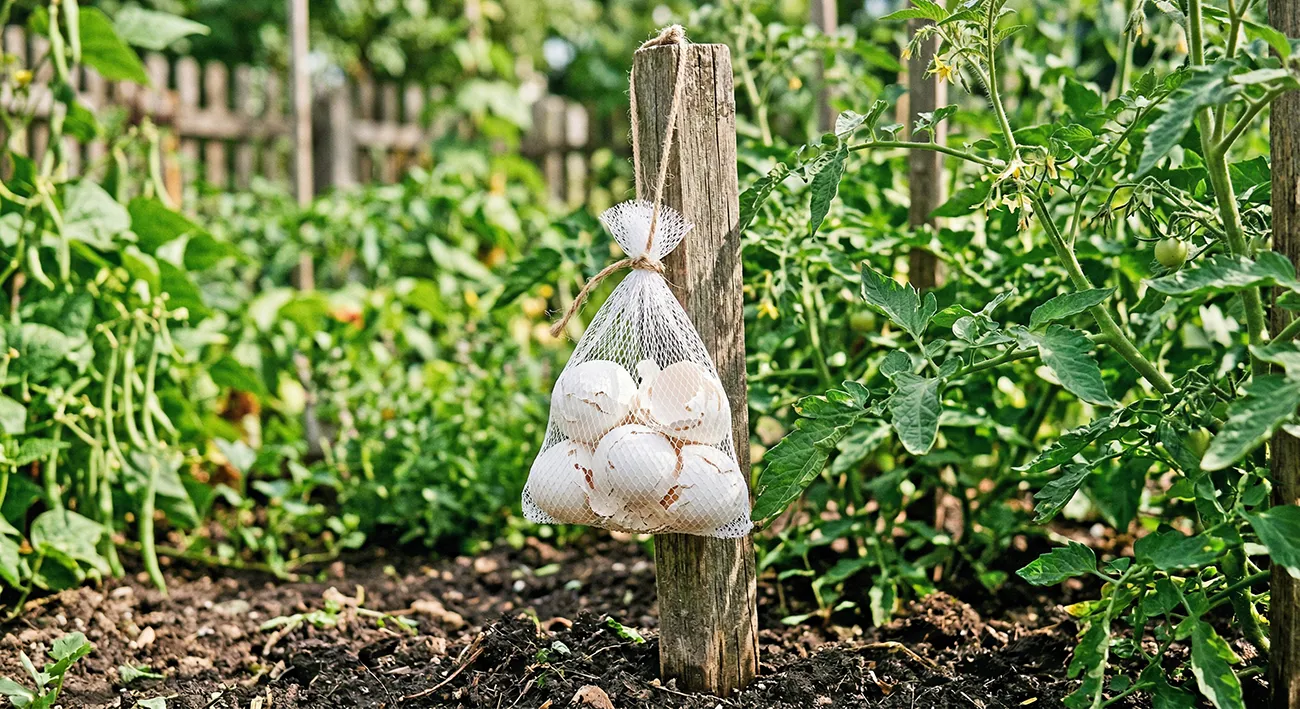
If you see a mesh bag filled with eggshells hanging in a garden for the first time, your reaction is usually: “Why would anyone do that?” It doesn’t look particularly attractive, and it doesn’t seem especially useful. Yet some gardeners repeat this trick season after season. The reason isn’t just one thing. In fact, it’s a combination of effects that can make a difference—but only if you understand how the method works and where its strengths and limitations lie.
It’s not just one reason – it’s a combination of three
Most people think this is just a pest-control trick. That’s only part of the story. When you look at how it’s actually used, three main reasons stand out:
- storage and drying of eggshells
- helping birds (and indirectly protecting the garden)
- immediate availability as a soil amendment
This means the bag is not an “active protection tool,” but more of a convenient resource the gardener can use as needed.
1. Helping birds (and why this matters more than it seems)
This is the part many people overlook. Birds, especially in spring, need calcium to produce eggs. Without enough calcium:
- eggshells become weaker
- young birds develop poorer bone structure
- nesting success decreases
That’s why birds actively search for calcium sources. Eggshells are one of the easiest to find.
When you hang a bag:
- birds can land on it
- peck at the shells
- return to the garden regularly
And here’s the key effect: birds aren’t just visitors—they’re also natural predators of many garden pests.
So with one simple action, you:
- support local bird populations
- reduce insect numbers in your garden
2. “Always ready” protection against slugs and soft pests
The second practical reason is very simple: convenience.
Instead of storing shells in your kitchen or compost, you keep them directly in the garden:
- dry
- clean
- ready to use
When you notice a problem (for example, slugs on lettuce), you can:
- take shells from the bag
- crush them
- scatter them around plants
The sharp edges create an uncomfortable surface for soft-bodied pests.
3. Slow calcium release – but not as fast as many think
Many articles claim eggshells “feed plants.” That’s partly true—but much more slowly than people expect.
Eggshells contain a lot of calcium, but:
- they decompose very slowly
- nutrients are not immediately available
When hanging in a mesh bag:
- they dry out
- gradually break down
- rain can wash smaller particles into the soil
Over time, they can improve soil quality—but they won’t solve urgent calcium deficiencies (like blossom end rot in tomatoes).
4. Why a mesh bag instead of scattering shells
This is a practical detail.
If you simply throw shells on the ground:
- they quickly get wet
- can develop mold
- lose their structure
A mesh bag allows:
- continuous drying
- air circulation
- easy access
Plus, everything stays in one place—which is surprisingly important during garden work.
5. Where this trick works—and where it doesn’t
It’s important not to expect too much.
It can help with:
- attracting birds
- reducing certain insects (indirectly)
- quick protection of individual plants
But it doesn’t work as:
- a standalone pest control method
- a fast-acting fertilizer
- a solution in very wet conditions
It works best as part of a broader gardening system—not as a miracle solution.
6. What to watch out for (most people miss this)
- always rinse shells (to remove egg residue)
- let them dry thoroughly
- avoid overuse around acid-loving plants
Eggshells can slightly raise soil pH, which doesn’t suit all plants.
7. A small practical tip
- use several smaller bags
- hang them around different areas of the garden
- combine with other methods (mulch, netting, manual pest removal)
This creates a more balanced system instead of relying on just one trick.
Read More: