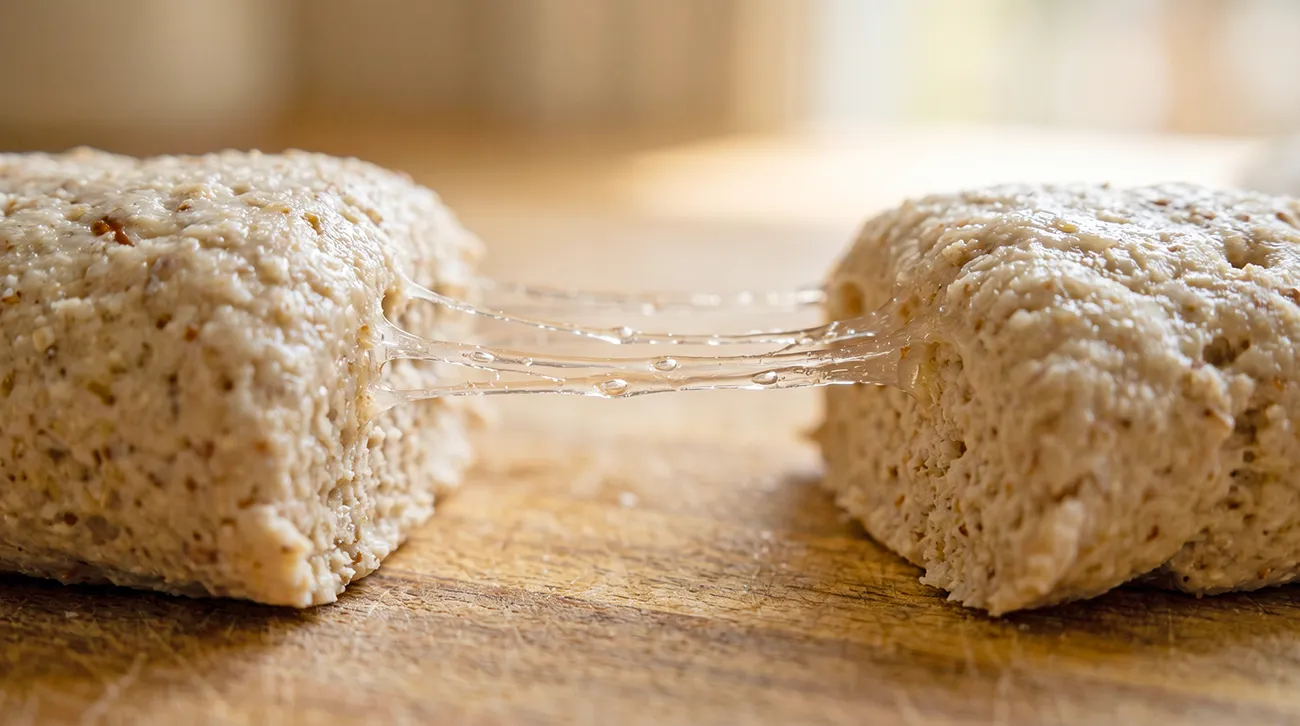
Gluten-free bakers have spent years chasing the springy crumb and pliable dough that wheat delivers without effort. Synthetic gums help, but many leave a rubbery chew or a chemical aftertaste. Enter psyllium husk, the soluble-fibre superstar from Plantago ovata. Sprinkle it into a recipe and it swells into a gel that traps water, holds gas and behaves uncannily like gluten strands. The result? Bread that arches happily in the tin, crackers that snap instead of crumble, and cakes that stay soft for days. Yet psyllium is more than a structural trick: it boosts fibre intake, tempers post-meal glucose and prolongs freshness, all with a neutral flavour that hides in the background.
Key takeaways:
- Hydrated psyllium forms a gel network mimicking gluten, improving rise and sliceability in diverse gluten-free doughs.
- A 3–5 g psyllium dose per 100 g flour lifts fibre to “source of fibre” claims without altering taste.
- Precise water ratios matter; under-hydrated psyllium steals moisture and leaves loaves gritty or sunken.
What Makes Psyllium Husk Unique?
Psyllium is 70-plus % soluble fibre; when mixed with water it forms viscous, elastic chains that cling to starch granules. Unlike xanthan or guar, its gelling power strengthens as temperatures climb, so structure sets just in time for oven spring. Recent research showed psyllium-quinoa breads rising 25 % higher than gum-based controls . Because the husk’s flavour is virtually nil, even delicate vanilla cupcakes escape off-notes.
How Psyllium Mimics Gluten’s Elastic Web
Gluten proteins link into a stretchy lattice that traps carbon dioxide from yeast. Psyllium pulls off a similar trick by:
- Absorbing up to 12× its weight in water, creating a gelatinous matrix that catches expanding gas.
- Increasing dough viscosity, which slows bubble coalescence and produces finer, more uniform crumb .
- Interacting with starches to delay gelatinisation, buying dough extra expansion time before the crust sets.
Choosing the Right Form: Powder, Whole Husk or Gel
Whole husk flakes are widely available and easy to weigh, but powdered psyllium disperses faster and darkens crumb less. For recipes needing ultra-smooth texture (e.g., sandwich bread) many bakers blend powder directly with dry ingredients. If rapid hydration matters—think waffles or pancake batter—premixing psyllium with warm water for 2 minutes forms a “gel starter” that folds in without lumps. Commercial mills sometimes label pre-hydrated concentrates as psyllium husk gel; they deliver consistent viscosity but cost more.
Hydration Mathematics: Getting the Ratios Right
The golden rule: add 5–7 g extra water for every gram of psyllium. Under-hydration leaves dough tight; over-hydration collapses structure. In a basic loaf with 400 g flour blend, 10 g psyllium and 60 g additional water usually yield a dough you can knead lightly without sticking to palms.
Pro tip: let the mixed dough rest 15 minutes. Psyllium continues to hydrate, thickening the mass and preventing last-minute flour dumps that unbalance the recipe.
Application Spotlight: Breads that Slice and Toast Beautifully
Study after study confirms psyllium’s edge over single gums. In 2025 trials, buckwheat loaves with 4 % psyllium achieved a specific volume of 3.16 mL/g—nearly triple gum-free versions—and kept a soft crumb for 72 hours . Home bakers report:
Sandwich loaves – 8–10 g psyllium per 500 g flour provides tensile strength for tall tins.
Artisan boules – Hydrate psyllium separately, then fold into dough to encourage an open crumb.
Burger buns – Combining psyllium with a little chia gel adds resilience so buns spring back after the first bite.
Beyond Bread: Cookies, Cakes and Pasta
Although cookies need less structure, a whisper of psyllium can curb spread. Try 1 g per 100 g flour for tidy edges. In sponge cakes, replace half the gum with 2 g psyllium for a moist, flexible crumb that rolls without cracking. Fresh gluten-free pasta benefits, too: 3 g psyllium per 200 g flour lets dough stretch thinly yet resist tearing, reducing dependence on starches that can turn gummy when boiled.
Nutrition Upgrade: Soluble Fibre, Prebiotics and Glycaemic Control
Adding 5 g psyllium to a muffin portion supplies one-sixth of the daily 30 g fibre target and, according to a 2026 food-tech review, lowers predicted glycaemic response by up to 14 % . Soluble fibre slows starch digestibility and feeds gut microbiota; bakers can legitimately claim “source of fibre” or even “high fibre” on labels with minimal formulation tweaks. For consumers managing cholesterol, multiple clinical trials have credited psyllium with modest LDL reductions—benefits preserved when delivered via baked goods.
Troubleshooting Common Pitfalls
Dry, Crumbly Texture:
Increase water by 5 % increments; psyllium may be fresher (and thirstier) than the batch your recipe assumed.
Purple Crumb:
Some psyllium brands tint batter slightly; lighten with extra white rice flour or choose de-husked powder.
Gummy Bottom Crust:
Bake five minutes longer or cool loaves on a wire rack; psyllium retains moisture, so steam must escape fully.
Sourcing and Storage Tips
Look for food-grade psyllium labelled “99 % husk purity”. Farm-supply grades may contain fine sand. Store in an airtight jar away from humidity; once psyllium absorbs ambient moisture, potency dips. Bulk suppliers often provide certificates confirming metal-detector screening and microbial counts compliant with U.S. Food and Drug Administration limits.
The Future of Psyllium-Driven Formulations
Product developers are pairing psyllium with proteins like aquafaba powder or fava isolate to craft egg-free, gluten-free batters that whip and set like classics . Meanwhile, start-ups are exploring enzymatic modifications that boost psyllium’s emulsifying ability, potentially replacing multiple additives with a single, recognisable ingredient. Market analysts expect the global psyllium bakery segment to grow 9 % annually through 2030 as consumers chase cleaner labels and gut-friendly fibre.