Houseleek (Sempervivum tectorum) is one of those plants that can be found on almost every old farmhouse or garden. With its fleshy rosette-shaped leaves and its ability to survive even in the driest and harshest conditions, it truly lives up to its Latin name “sempervivum” – meaning “always alive.” In the past, many households planted it on rooftops, believing it would protect against lightning strikes and fires. But this hardy succulent is not just a symbolic or ornamental plant – it also has a rich history in traditional medicine. It is best known as a natural remedy for ear infections, though its uses are far broader.
Key Takeaways
- Houseleek is best known as a traditional remedy for ear infections, but its uses go much further.
- Its leaf sap soothes the skin from burns, insect bites, and minor wounds.
- Folk medicine also used it against corns and warts.
- Beyond its healing powers, it is a resilient ornamental plant with symbolic value in European tradition.
Houseleek in Folk Medicine
Since the Middle Ages, people have used houseleek sap to treat a variety of ailments. Its thick leaves contain juice rich in mucilaginous compounds, tannins, and organic acids. In folk medicine, it was traditionally used for:
- ear infections (a few drops of sap were placed directly into the ear),
- soothing burns,
- treating corns and warts,
- insect bites,
- calming skin inflammations.
Ear Infections – The Most Famous Use
The most widespread traditional use of houseleek was for earaches. The method was simple: a few drops of sap from a freshly squeezed leaf were dripped into the painful ear. This was believed to ease both pain and inflammation. While today this practice is rarely recommended due to safer medical treatments being available, its long-standing use highlights the plant’s importance in traditional healing.
Does Houseleek Help with Ear Infections?
Houseleek (Sempervivum tectorum) is traditionally known for its strong anti-inflammatory and antibacterial properties, which is why it has long been considered a natural remedy for relieving symptoms of ear infections. Its fresh juice contains compounds that may help reduce inflammation, ease pain, and slow the growth of bacteria that can trigger infection.
How It Was Traditionally Used for Ear Infections
⚠️ Important Warning: Before using houseleek to treat ear infections, always consult a doctor – especially for children or in cases of severe symptoms.
Preparation
- Wash and dry fresh houseleek leaves thoroughly.
- Select a few of the juiciest leaves and gently squeeze out the sap.
Preparing the Ear
- Make sure the ear is clean and dry.
- If necessary, gently clean the outer ear with a cotton swab, but never insert anything deep into the ear canal.
Applying the Juice
- Place a few drops of the freshly squeezed juice into the affected ear.
- Tilt your head to the side so the juice stays inside for a few minutes.
- After several minutes, tilt your head in the opposite direction to allow the liquid to drain out.
- Traditionally, this process was repeated twice daily until symptoms improved.
? Modern medicine offers safer, clinically proven treatments for ear infections. While houseleek was once a popular folk remedy, today it should be regarded as part of traditional knowledge rather than a primary treatment.
Houseleek as Natural Skin Care
The cooling, refreshing sap of houseleek works much like aloe vera. It can be applied to:
- sunburns, to calm the skin,
- minor cuts and scratches,
- insect bites to reduce itching,
- sensitive or irritated skin as a natural soothing mask.
Its gel-like juice forms a protective layer on the skin and supports regeneration.
Corns and Warts
In folk remedies, houseleek also played a role in treating corns and warts. Regular application of its sap was believed to soften hardened skin and gradually remove the growth.
How it was used:
- Cut a fresh leaf and rub the inner side directly onto the affected area several times a day.
- Repeat daily for several days or weeks until the skin condition improves.
Houseleek Tea for Various Health Concerns
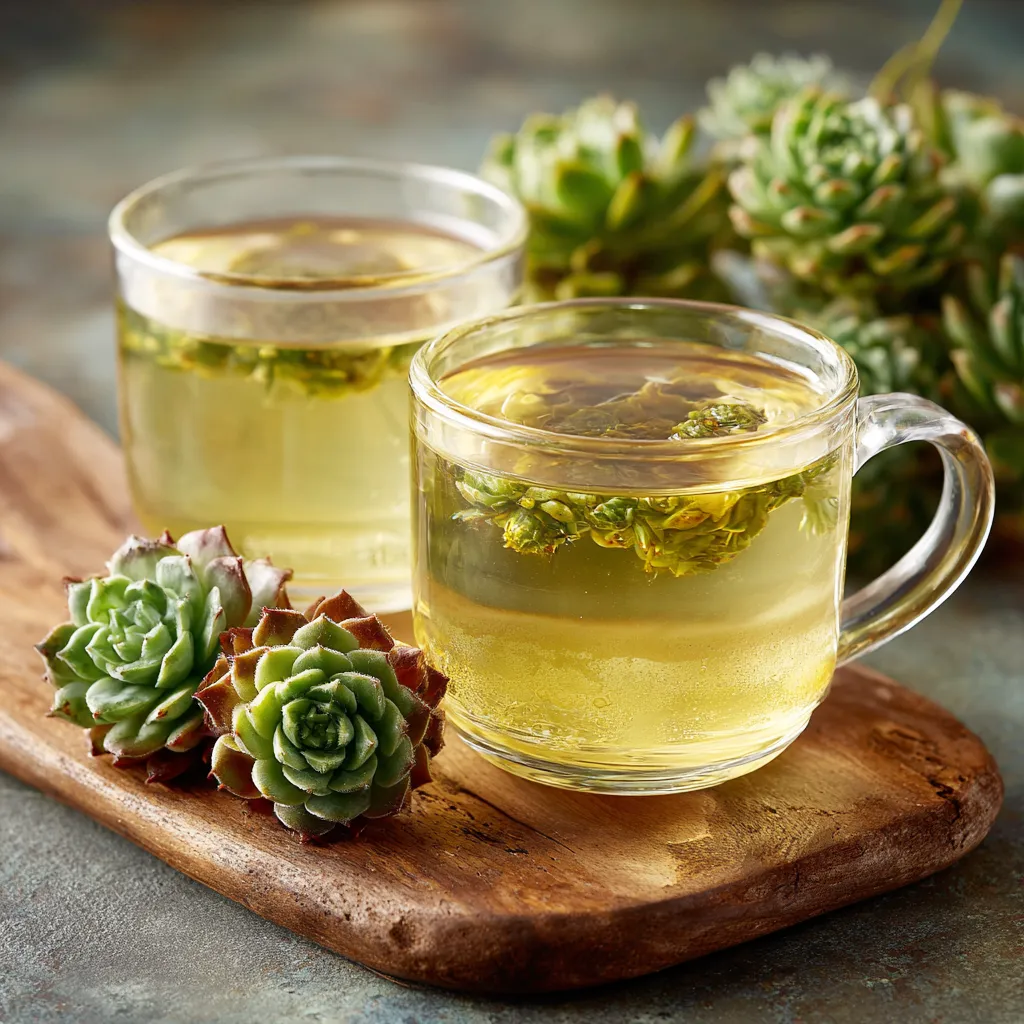
Houseleek (Sempervivum tectorum) can also be prepared as a tea, using freshly picked leaves. This herbal infusion has long been valued in folk medicine and is believed to help with a range of health issues.
Traditional Benefits of Houseleek Tea
- Shingles (Herpes zoster): Houseleek tea has been traditionally used to ease symptoms of this viral infection.
- Skin and hemorrhoids: Drinking the tea may support skin health and bring relief in cases of hemorrhoids.
- Internal parasites: Folk remedies also mention its use against intestinal worms and other parasites.
- Oral and throat health: Some practitioners recommend houseleek preparations for soothing inflamed gums and sore throats.
- Corns and sunspots: Houseleek juice and tea have also been applied or consumed to help reduce corns and lighten sun-induced skin spots.
Other Preparations
Beyond tea, houseleek juice is often used to make tinctures or incorporated into various homeopathic remedies. Its cooling, anti-inflammatory properties make it a versatile plant both in internal and external applications.
Symbol and Ornament
In the past, houseleek was planted on rooftops to ward off lightning, fire, and even evil spirits. Today, it is mostly grown as an ornamental plant – highly valued for its resilience, low maintenance, and ability to beautify rock gardens, walls, and pots with its striking rosettes.
Growing Houseleek
This succulent is one of the easiest plants to grow:
- thrives in sunny locations,
- prefers sandy, poor, well-drained soil,
- tolerates drought and heat,
- spreads quickly to form dense mats of rosettes.
Because of its toughness, houseleek is an excellent choice for rockeries, path edges, walls, or even green roofs.
What Does Research Say?
Modern research has shown that houseleek contains antioxidant and antimicrobial properties. Extracts of the plant may have anti-inflammatory effects and promote wound healing (PubMed). Although its use for ear infections is no longer medically recommended, its long history underscores its role as a versatile and healing plant.