Paving stones are a popular choice for driveways, patios, and garden paths because they are durable, attractive, and easy to install. But despite their strength, they can lose their original look over time. Dirt, moss, lichen, oil stains, and soil gradually build up, leaving the stones looking darker and worn.
The good news is that with the right cleaning methods, you can restore their fresh appearance and keep them looking beautiful for many years.
Key Takeaways:
- Paving stones darken due to dirt, moss, oil, and weathering.
- They can be cleaned manually, with natural remedies, or using a pressure washer.
- Sealing and regular maintenance keep them looking fresh longer.
- Avoid excessive water pressure and harsh chemicals.
Why Do Paving Stones Darken?
Before tackling the cleaning process, it’s useful to understand the main causes:
- Dirt and dust buildup – carried by rain and wind.
- Moss and lichen growth – thrive in shaded, damp areas.
- Oil, grease, and stains – especially on driveways where cars are parked.
- Aging and wear – the surface gradually erodes, creating a darker look.
Manual Cleaning of Paving Stones
For small areas or lighter stains, manual cleaning is usually enough.
Steps:
- Sweep the paving stones with a broom to remove leaves and loose dirt.
- Prepare a solution of warm water and a few drops of dish soap.
- Scrub the surface with a wire brush or stiff broom.
- Rinse with clean water and let dry.
This simple method works well for regular maintenance.
Using a Pressure Washer
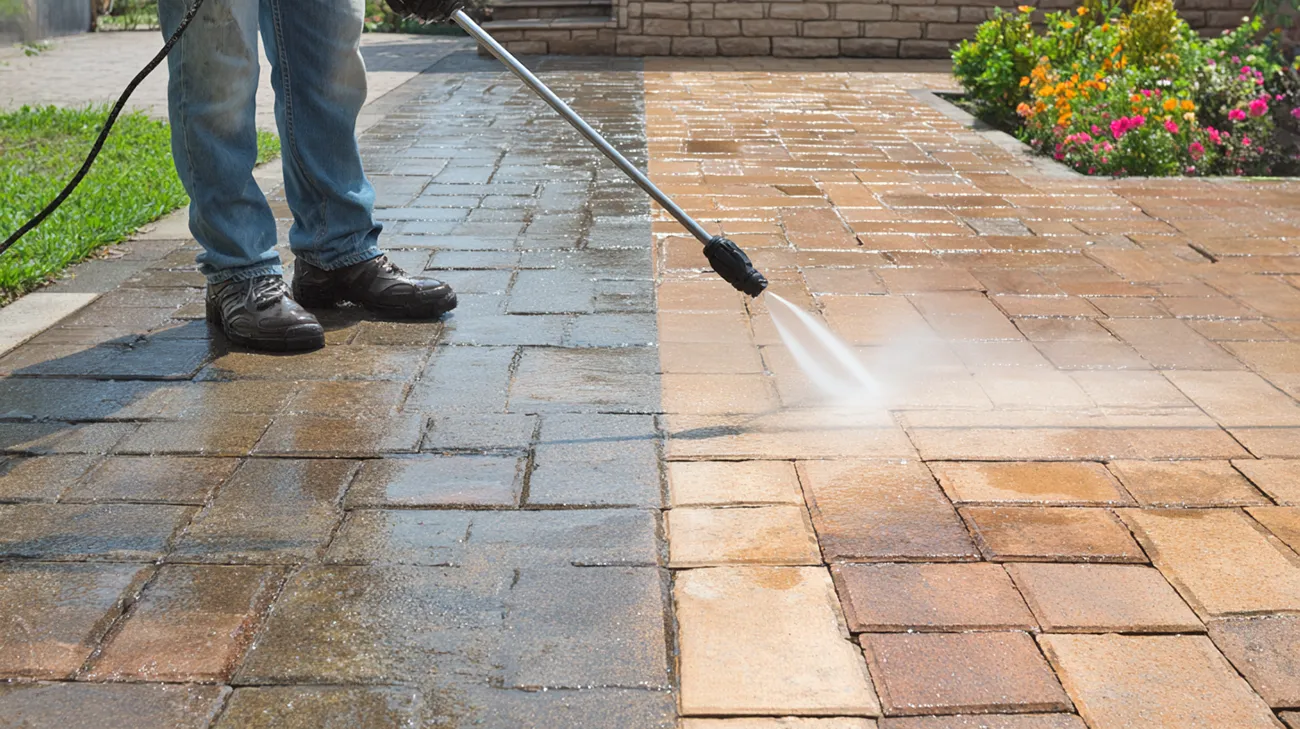
For larger surfaces, the fastest and most effective method is a pressure washer.
- Use a wide spray nozzle to avoid damaging the surface.
- Start with the lowest pressure setting and increase gradually.
- Move slowly over heavily soiled areas, holding the nozzle at a slight angle.
- Be careful not to wash away the jointing sand – refill it afterwards if needed.
Natural Solutions Against Moss and Lichen
If moss has taken over your paving, you can try eco-friendly methods:
- Vinegar: Dilute with water (1:1), apply to moss, leave for a few hours, then rinse.
- Baking soda: Sprinkle on the wet surface and scrub.
- Salt: Works against moss, but avoid using it near plants as it can harm the soil.
These methods are safer for the environment and often effective if used early.
Specialized Cleaning Products
Hardware stores also carry special cleaners designed for concrete and paving stones. They are formulated to dissolve oil stains, stubborn lichen, and long-standing grime.
Tips:
- Always follow the manufacturer’s instructions.
- Wear protective gloves when applying.
- Ideal for oil spills, driveway grease, and deeply embedded dirt.
Protecting Paving Stones After Cleaning
Once clean, it’s worth protecting your paving stones to prevent future darkening:
- Impregnation/sealant: Creates a protective layer that repels water and dirt.
- Regular sweeping and rinsing: Sweep monthly and rinse when needed.
- Remove moss early: Don’t wait for it to spread across the surface.
With proper protection, your paving stones will stay cleaner for longer.
Common Mistakes When Cleaning
- Too much pressure: Using a high-pressure washer setting can chip or damage the surface.
- Harsh chemicals: Aggressive cleaners can damage concrete and harm the environment.
- Poor drainage: Standing water on paving accelerates dirt and moss buildup.