When autumn arrives and grapes ripen into deep purple, blue, or golden hues, it’s hard not to crave a glass of grape juice. This thick, sweet liquid is more than just a drink – it’s part of tradition, family memories, and the pantry shelves of many homes. While modern juicers make the process faster, the truth is you don’t need one at all. With a few basic kitchen tools, a little patience, and a love for natural flavors, you can make your own grape juice at home.
Why Choose Homemade Grape Juice?
Before diving into the methods, it’s worth asking: why make grape juice at home instead of buying it from the store? The answer lies in freshness, quality, and authenticity.
Homemade grape juice offers:
- full control over the quality of fruit,
- no preservatives, artificial coloring, or added sugars,
- richer flavor and higher nutrient content,
- flexibility to adjust sweetness, tartness, or thickness to your taste.
And let’s not forget – making your own juice is a satisfying way to use your garden harvest or fresh grapes from a local vineyard. Many people say that once they try homemade, store-bought juice never tastes the same again.
Tools You’ll Need
You don’t need professional equipment – just common kitchen items. Cleanliness is key, because juice spoils quickly if bacteria are introduced.
You’ll need:
- a large pot (stainless steel or enamel works best),
- a sieve or cheesecloth,
- a wooden spoon or potato masher,
- bottles with caps or lids,
- a funnel for easy pouring.
Each tool has its purpose. Cheesecloth, for example, allows you to strain juice finely, while a funnel helps avoid mess when filling bottles.
Preparing the Grapes
The flavor of your juice depends on the grapes you choose. Ripe but not overripe grapes give the best result. Soft or moldy grapes will make the juice ferment too quickly.
Steps:
- Wash grapes thoroughly under running water.
- Remove damaged or spoiled berries.
- Detach grapes from stems (optional, but recommended for a cleaner taste).
Some prefer leaving a few stems in, as they add a subtle bitterness, similar to wine. It’s really a matter of taste.
Extracting the Juice
So how do you get juice without a juicer? There are several tried-and-true methods.
Method 1: Cooking and Pasteurization
This is the most common method if you want juice that lasts for months.
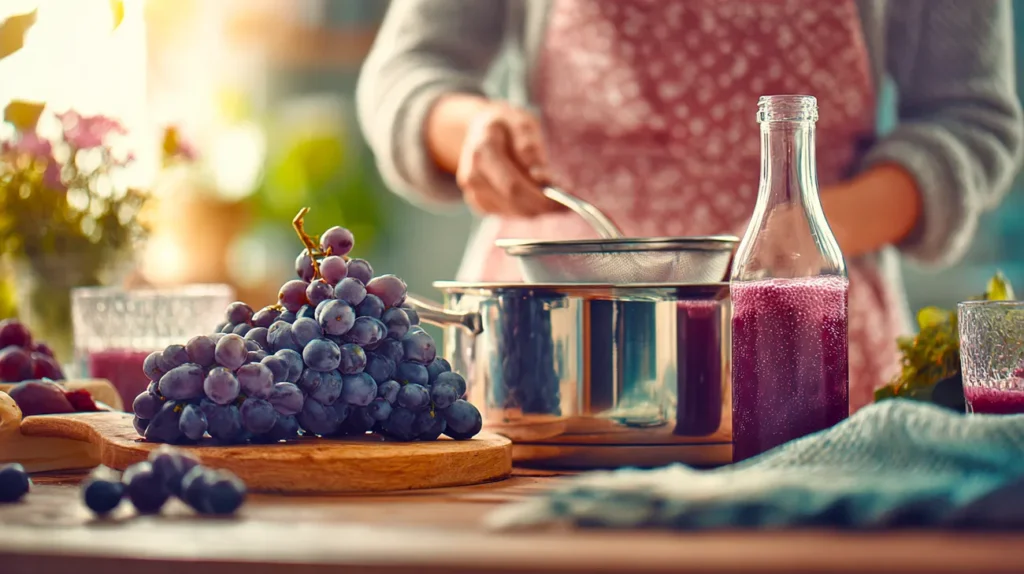
- Place cleaned grapes in a large pot.
- Add a splash of water (about ½ cup per kilo of grapes) to prevent scorching.
- Heat gently, stirring occasionally, until skins burst and release juice.
- Strain the mixture through a sieve or cheesecloth.
- Return juice to the pot, heat it almost to boiling (but don’t let it roll), and pour hot into sterilized bottles.
The result: naturally sweet, rich juice that can be stored for winter.
Method 2: Cold-Pressed with Cheesecloth
For the freshest taste, you can extract juice without heat.
- Crush grapes by hand or with a spoon.
- Place pulp into a cheesecloth.
- Squeeze tightly over a bowl to release juice.
- Strain once more for clarity.
This juice has a vibrant, fresh flavor, but it should be consumed within a few days or frozen.
Method 3: Using the Oven
A lesser-known but effective technique uses gentle oven heat.
- Place washed grapes in a large baking dish.
- Heat oven to 60–70 °C (140–160 °F).
- Leave grapes inside for several hours until skins burst.
- Strain carefully.
This method draws out juice slowly, intensifying its flavor.
Perfecting the Taste
Homemade juice can always be adjusted. If too tart, add sugar, honey, or a splash of apple juice. If too thick, dilute with water. Experiment until it feels just right.
Flavor boosters include:
- cinnamon sticks,
- cloves,
- vanilla bean,
- fresh mint or lemon balm leaves.
Adding spices while heating will infuse the juice with warm, seasonal notes.
Storing Grape Juice
Storage is key to preserving homemade juice safely.
- Sterilize bottles by boiling them for at least 10 minutes.
- Fill with hot juice, almost boiling.
- Seal tightly with clean lids.
Keep bottles in a cool, dark place. Properly sealed, juice can last up to one year.
Health Benefits of Grape Juice
Grapes are packed with antioxidants such as polyphenols and resveratrol, known for supporting heart and vascular health. They also provide vitamin C and B vitamins.
That said, grapes are naturally high in sugar. One glass of juice contains quite a bit, so enjoy it in moderation, especially if you need to monitor blood sugar.
Beyond Drinking: Culinary Uses
Homemade grape juice isn’t just for sipping. It can be used in:
- sauces for meat or poultry,
- desserts like cakes and jellies,
- smoothies and mocktails,
- frozen treats for kids.
In some rural traditions, grape juice was even used as a natural tonic against fatigue or mild anemia.